Rebranding for Fun and Profit
But Mostly Fun.
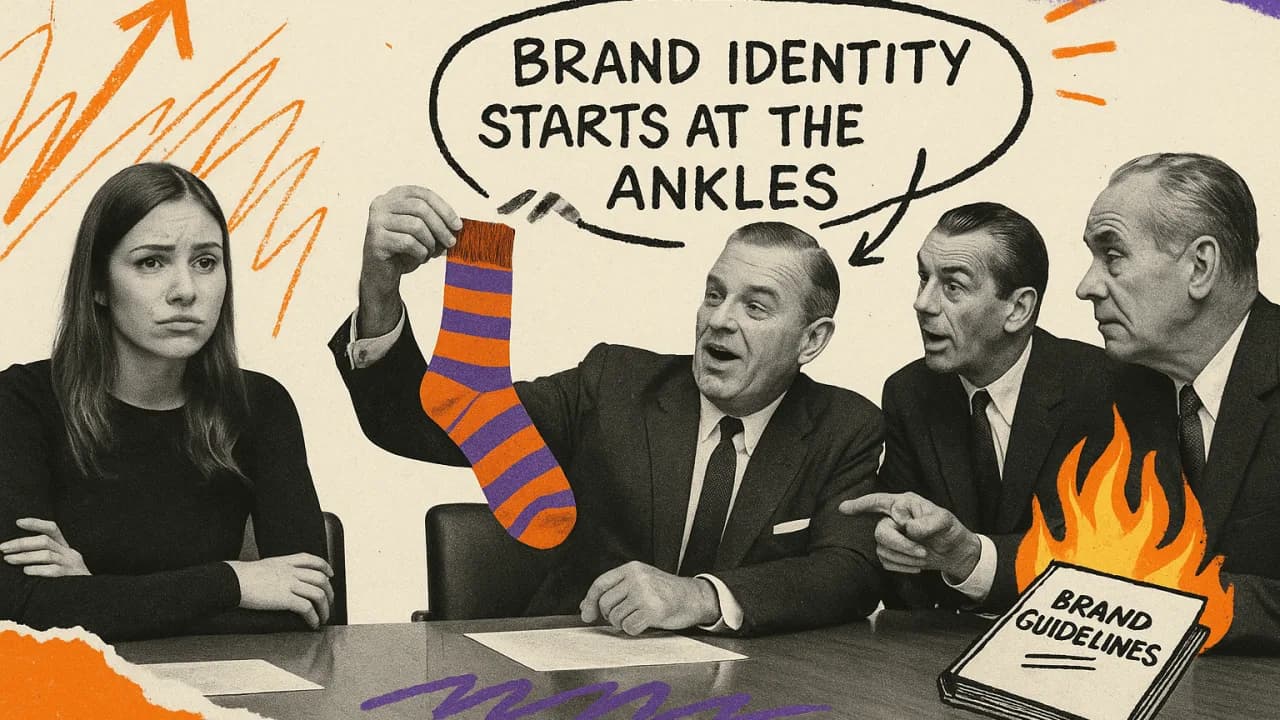
Table of Contents
Most rebrands don’t spring from seismic market shifts or customer feedback demanding less blue. No, they’re usually sparked by something far more internal: executive ennui, a new CMO staking their claim, or a sudden bout of gradient envy inspired by a competitor's latest LinkedIn glow-up.
You’re focused on shipping features or closing deals when - like thunder from Mount Olympus (read: the exec Slack channel) - comes the decree: “We’re considering a small brand refresh.” Don’t worry, they say. It’s just a logo tweak. Maybe a new font. Some updated PowerPoint templates. Nothing existential here!
But deep down, everyone knows how this plays out. Today it’s “just a logo refresh”; by next quarter, you’re deep in an all-hands debate over whether your new brand archetype is “The Sage” or “The Rebel,” and if your mission statement has just the right number of verbs to sound disruptive - but not desperate.
Everything revolves around that magical Zoom gathering: a handful of execs, one over-caffeinated designer, and a round of existential questions. “What does our brand mean?” “Should we make the logo bigger?”
The official rationale is noble: alignment with evolving values, clarity in the marketplace, differentiation from competitors (who had nothing to do with this decision). But let’s be real: someone up top saw a competitor’s sassy new wordmark on LinkedIn, caught a case of font envy, and now you’re about to drop six figures on an agency that spells “strategy” with two Gs and an umlaut.
The Agency arrives with a deck that promises to “unlock your true brand essence,” which translates to swapping navy blue for slightly-different navy blue and inventing a shade of teal called “Velocity.”
The Agency arrives with a deck that promises to “unlock your true brand essence,” which translates to swapping navy blue for slightly-different navy blue and inventing a shade of teal called “Velocity.” Meanwhile, Marketing assures everyone this is all for the customer - that elusive species who definitely cares whether your SaaS logo now faces left instead of right.
The Branding Spiral
Still, the show moves forward. Stakeholders are herded into feedback sessions where everyone pretends to grasp the difference between “brand promise” and “brand personality.” The soul-searching begins. Every department takes their turn at the mic, describing what they think the company is. Product claims you’re pioneers. Customer Success aspires to be known for empathy. RevOps wonders if all their dashboards need updating - again.
The kickoff meeting is equal parts pep rally and group therapy. The CMO invokes “brand purpose” at least fourteen times. Design reveals early concepts that look suspiciously like last week’s trending Figma template. Product raises usability concerns. Sales wonders if this will help them close more deals (it won’t). HR just wants confirmation there will be new swag (there will).
As you look for a new direction, Product wants to be “bold.” Marketing campaigns for “authenticity.” Sales supports anything that helps close deals. Engineering just wants you to pick a color so they can update the CSS variables and return to debugging something that actually matters.
Ultimately, the audience isn’t really your customer - it’s yourselves. Because if there’s anything SaaS folks love more than ARR, it’s seeing their company name on a new hoodie. And through it all, one rule persists: never admit you’re rebranding because Competitor X did it first. This is about your journey. Your evolution. Ignore those vision boards that resemble someone else’s homepage - pure coincidence.
Ultimately, the audience isn’t really your customer - it’s yourselves.
As Slack channels become battlegrounds for color palettes and font sizes, someone suggests limited-edition socks “for internal alignment!”. Weeks become months (because no branding spiral ever wraps on schedule), and eventually no one remembers what was wrong with the old brand anyway.
At this point, pulling out would be like canceling your wedding after sending invites.
Where the Rebrand Hits the Fan
Finally, the big day arrives. It’s internal Mardi Gras meets Apple Keynote: confetti GIFs in Slack, celebratory Zoom backgrounds, and enough branded water bottles to hydrate an entire WeWork building.
The CEO posts earnestly on LinkedIn about “the next chapter,” waxing poetic about journeys, transformations, and “our unwavering commitment to innovation”. Employees parade around in fresh hoodies like they’ve been knighted by Sir Richard Branson himself. Marketing floods Instagram with lovingly staged mugs and laptop stickers, bracing for likes from…well, mostly other SaaS marketers.
Marketing floods Instagram with lovingly staged mugs and laptop stickers, bracing for likes from…well, mostly other SaaS marketers.
LinkedIn lights up with congratulatory comments from industry peers who’ve been through this before (“Looks great! Big move!” / “Congrats on the rebrand!” / “That font is… something else!”). DMs trickle in asking which agency you used - because nothing says originality like following someone else’s playbook step-for-step.
And then there are your customers - the ones supposedly top-of-mind throughout this journey. Their reactions range from mild curiosity (“Did your website always look like this?”) to pure indifference (“Cool logo. Now about that feature request from 2022…”). A few might wonder if they clicked the wrong link; most won’t notice until their next invoice features slightly different typography.
Support teams brace for tickets about “the missing button” or why their favorite dashboard now clashes with their browser theme. But those will fade. The world keeps spinning; your churn rate remains stable; your NPS score doesn’t budge.
Inside, though, it’s a party no outsider could possibly comprehend. New swag is distributed like Halloween candy; lunch-and-learns pop up on “living our brand values”; everyone updates their LinkedIn headers - because surviving one SaaS rebrand deserves at least some public recognition.
Takeaways & Wisdom Gleaned from Surviving a Rebrand
So what emerges from this latest rebranding adventure (besides discovering how quickly grown adults will go to war over font weights)? Your new look probably won’t make ARR spike or turn customers into raving fans overnight. Most people outside your bubble will barely notice at all.
But within those digital walls? People feel united, if only briefly, in shared purpose and fresh swag. Teams bond over late-night Figma revisions and inside jokes. For a moment, there’s real excitement - a reminder that work can actually be fun when it isn’t all pipeline reviews and QBRs.
For a moment, there’s real excitement - a reminder that work can actually be fun.
Maybe that’s enough. If rebranding gives everyone permission to laugh at themselves (and each other), injects some much-needed energy into Slack threads, or simply results in better hoodies, it might just be worth every penny spent and every hour debating gradient angles.
Because branding isn’t just about what customers see - it’s about how teams feel. So change that logo if it sparks joy. Just don’t expect anyone outside HQ to care as much as you do.